
How to Plan a Birthday Party: Complete Step-by-Step Guide
This guide shows you exactly how to plan a birthday party from 8 weeks out to the last minute of cleanup. It gives you a complete planning system you can follow in order: set a budget, pick a theme, build the guest list, choose a venue, plan food and cake, set up decorations, and run a clear day-of timeline. It is written for parents planning a kids party, adults planning their own birthday, and anyone helping a friend or family member host. You do not need event experience to use it. Each section gives specific steps, numbers, and timeframes so you can make decisions quickly and avoid last minute stress. The guide is organized in planning order. Start with the 8-week timeline for the big picture, then work through budget, theme, guests, venue, food, and decorations. Finish with the day-of timeline and the master checklist, which pulls every step into one place you can print or copy. Use the checklist to track progress and check off tasks as you complete them.
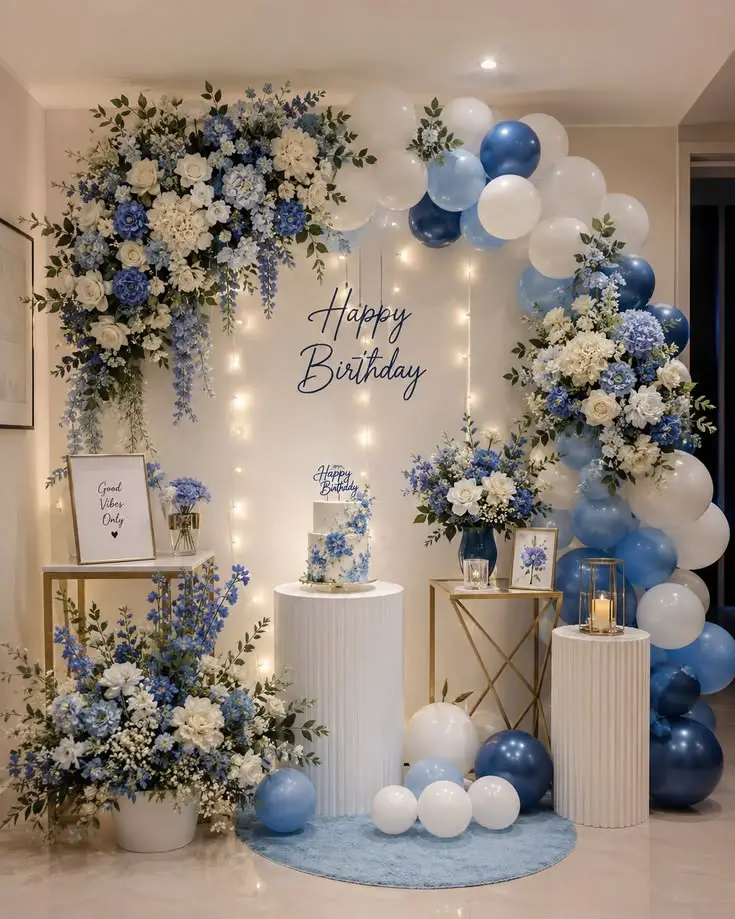
8-Week Birthday Party Planning Timeline
Work backward from party day. Start 8 weeks out for a venue party, or 4 weeks out for a small home party. Complete one block of tasks each week so nothing piles up at the end.
- 8 weeks out: Pick the date and 1 backup date, set the total budget, draft the guest list, and choose the party type: home, venue, or outdoor.
- 7 weeks out: Research venues, compare 3 options, and book the venue. Ask about capacity, setup time, cleanup rules, deposit, and cancellation policy.
- 6 weeks out: Choose the theme, book entertainment, photographer, or rentals, and confirm 2 helpers for setup and cleanup.
- 5 weeks out: Finalize the guest list, order the cake, and plan the menu. Collect dietary needs from guests now.
- 4 weeks out: Send invitations 3-4 weeks ahead. Set the RSVP deadline for 1 week before the party. Buy decorations and supplies.
- 3 weeks out: Confirm vendors, order party favors, plan games and activities, and build the music playlist.
- 2 weeks out: Chase missing RSVPs, confirm the final headcount range, buy nonperishable food and drinks, and prep DIY decorations.
- 1 week out: Confirm the final guest count, shop for perishable food, pick up or confirm the cake order, and print the day-of timeline.
- Day before: Charge the camera and phone, pack a party kit, prep food that holds overnight, and set up tables and decorations that can stay up.
- Party day: Follow the day-of timeline in this guide, greet guests, run activities on time, serve cake, and clean up in 60 minutes with helpers.
Budget Planning
Set one total number first, then split it across categories. Write the budget down and track every purchase in the same sheet so small extras do not quietly add 20 percent or more.
Typical cost splits
- Venue and rentals: 25 to 35 percent of the total.
- Food, drinks, and cake: 25 to 35 percent of the total.
- Decorations and supplies: 10 to 15 percent of the total.
- Entertainment and activities: 10 to 20 percent of the total.
- Invitations, favors, and miscellaneous: 5 to 10 percent of the total.
- Contingency: keep 10 percent of the total aside for price changes and last minute needs.
3 budget tiers
- Small home party: $150 to $300. 6 to 12 guests, homemade food, 1 cake, DIY decorations, free games, and digital invitations.
- Mid-range party: $400 to $900. 15 to 30 guests, a rented room or hall, ordered food or catering for 20 guests, a bakery cake, themed decorations, and 1 entertainer or activity.
- Larger venue party: $1,000 to $2,500. 40 to 80 guests, a full venue rental, catered food and drinks, a custom cake, rentals, decorations, and entertainment.
How to stick to the budget
- Book the venue and food first, because they drive most costs.
- Cap the guest list before you order food, favors, or seating.
- Set a per guest food cap, for example $8 to $15 per guest for a home party.
- Cut extras in this order: favors, extra decorations, premium upgrades, then entertainment add-ons.
- Review spending every Friday and stop nonessential purchases when a category hits 90 percent of its cap.
Choosing a Theme
Pick one clear theme and use it to guide colors, invitations, cake, and 3 to 5 decorations. A focused theme looks better and costs less than mixing 3 ideas at once. For kids party inspiration, see these birthday party ideas for kids and match the theme to the age group.
- Start with the birthday person’s top 2 interests, hobbies, colors, movies, or sports.
- Match the theme to age: toddlers need simple colors and characters, kids aged 6 to 12 enjoy active themes, teens prefer music, sports, or movie themes, and adults often prefer a color, decade, travel, or hobby theme.
- Match the theme to season: spring and summer suit garden, pool, and outdoor themes, while fall and winter suit cozy, movie, game, and indoor themes.
- Match the theme to venue: a small room needs a simple color theme, a hall supports a large backdrop, and a park supports sports or picnic themes.
- Choose 2 main colors and 1 accent color, then reuse them on invitations, table covers, balloons, and cake.
5 quick theme-picking questions
- What does the birthday person talk about most right now?
- Will guests be mostly kids, mostly adults, or a mix?
- Is the party indoors or outdoors, and how much setup space do you have?
- Can you run the theme with 5 decorations or fewer?
- Does the theme work for the budget, season, and venue rules?
If you answer no to question 4 or 5, simplify the theme. A simple theme that is done well beats a complex theme that is half finished.
Guest List and Invitations
Build the guest list in 3 groups: must invite, should invite, and optional. Add optional guests only if space and budget allow. For invitation wording and design help, see these birthday party invitations.
How many guests by party type
- Small home party: 6 to 12 guests.
- Medium party: 15 to 30 guests.
- Large venue party: 40 to 80 guests.
- Kids party starting point: the birthday child’s age plus 1 or 2 friends, then add siblings only if space allows.
- Adult party: invite 20 to 30 guests and expect 70 to 80 percent to attend.
Invitation timing
- Send invitations 3-4 weeks ahead of the party.
- Set the RSVP deadline 1 week ahead of the party.
- Send 1 reminder 3 days before the RSVP deadline.
- For a destination party or a holiday weekend, send save-the-date notes 6 to 8 weeks ahead.
What every invitation must include
- Birthday person’s name and age, if you want to share it.
- Date, start time, and end time.
- Full venue name and address, plus parking notes.
- RSVP name, phone or email, and deadline.
- Dress code, theme, and what to bring.
- Food notes, such as cake time and allergy request.
- Drop-off and pickup rules for kids parties.
Choosing a Venue
Choose the venue after the guest list and budget are set. Compare at least 3 options on price, capacity, setup time, and rules before you pay a deposit. Browse birthday party venues to compare venue types, costs, and booking policies.
Indoor vs outdoor decision factors
- Choose indoor when the forecast is uncertain, guests include toddlers or older adults, or you need power, restrooms, and kitchen access.
- Choose outdoor when you have 20 or more active guests, messy games, or a large yard or park space.
- Check shade, seating, restrooms, parking, noise rules, and rain backup for every outdoor venue.
- Check indoor lighting, table count, chair count, and setup time for every indoor venue.
- For outdoor parties, book a tent, covered patio, or indoor backup room at the same time as the venue.
Capacity rule and booking lead times
- Capacity rule: invite 10-20 percent fewer guests than the venue max capacity. For a venue rated for 50 guests, invite at most 40 to 45 guests.
- Count adults, helpers, and vendors in the headcount, not only invited guests.
- Popular venues and Saturday dates: book 6-8 weeks ahead.
- Community halls and restaurants: book 4-6 weeks ahead.
- Home parties: confirm the space and helpers 3-4 weeks ahead.
- Confirm the deposit, refund policy, setup window, cleanup deadline, and vendor rules in writing before you pay.
Food and Cake Planning
Plan food for the final RSVP count plus 10 percent extra, so you do not run out. Serve food in small batches and keep cold food cold and hot food hot. For menu ideas, see these birthday party food ideas and these birthday cake ideas.
How much food per guest
- Appetizers for a 2-hour party: 4 to 6 pieces per guest.
- Main course: 1 serving per guest, plus 10 percent extra.
- Sides: 2 small sides per guest, about 4 ounces each.
- Snacks for kids: 1 small bag of chips or popcorn per child, plus fruit and 2 drinks.
- Pizza rule: order 1 large pizza for every 3 to 4 guests, and add 1 extra pizza for every 12 guests.
Cake serving guide
- A standard 9-inch round cake serves 12-16 party-sized slices.
- For 20 guests, order 2 nine-inch cakes or 1 half-sheet cake.
- For 30 guests, order 1 half-sheet cake plus 12 cupcakes as backup.
- Order the cake 2-3 weeks ahead, and confirm pickup time, serving instructions, and allergy labels 3 days ahead.
- Cut party-sized slices 1 inch wide to stretch servings without running short.
Drink quantities and dietary needs check
- Drinks: plan 2 drinks per guest per hour, with water as 50 percent of the total.
- For 20 guests for 2 hours, plan 80 drinks total: 40 waters, 20 juices or sodas, and 20 extra drinks for refills.
- Ice: 1 pound per guest for a 2-hour party.
- Ask about dietary needs on the RSVP: vegetarian, vegan, gluten-free, nut-free, dairy-free, and halal or kosher needs.
- Label every dish with ingredients and allergens, and keep 1 safe option for each common need.
- Keep serving spoons separate for each dish to avoid cross-contact.
Decoration Checklist
Decorate 3 zones only: entry, main table, and photo spot. That keeps setup under 90 minutes and keeps the room from looking cluttered. For full room ideas, see these birthday party decorations.
Room-by-room decoration list
- Entry: welcome sign, 6 to 10 balloons, 1 balloon garland or arch, and a table for gifts.
- Main room: table covers, 1 centerpiece per table, 10 to 20 balloons, 2 banners, and 1 backdrop.
- Food and cake table: cake stand, 2 serving trays, food labels, 1 themed topper, and a table runner.
- Photo spot: backdrop, 1 large balloon cluster, props box, and good lighting.
- Outdoor space: string lights, 4 to 6 chairs per table, shade cover, trash cans, and bug spray station if needed.
What to buy vs DIY
- Buy: balloons, table covers, banners, cake stand, lights, and disposable plates and cups.
- DIY: welcome sign, photo props, food labels, centerpieces, and a simple backdrop from paper and fabric.
- DIY only 2 to 3 items. Buying the rest saves 3 to 5 hours and avoids last minute craft stress.
Setup order
- Clean the space and set tables and chairs first.
- Hang the backdrop and banners next, while ladders are out.
- Add table covers, centerpieces, and the food table.
- Inflate balloons and build the garland or arch.
- Set the photo spot and test lighting and camera angles.
- Set out plates, cups, napkins, and trash cans last, 30 minutes before guests arrive.
Day-of Timeline Template
Use this template for a 2-hour party that starts at 2:00 PM. Shift the times to match your start time, but keep the same gaps. Assign 1 helper to food, 1 helper to guests, and 1 helper to photos.
- 3 hours before (11:00 AM): Pick up the cake, chill drinks, prep food, and pack the party kit: tape, scissors, lighter, candles, trash bags, paper towels, phone charger, and first-aid kit.
- 2 hours before (12:00 PM): Set tables and chairs, hang backdrop and banners, and set up the photo spot.
- 1 hour before (1:00 PM): Set the food table, inflate balloons, set out plates and cups, and run a 10-minute sound and music check.
- 30 minutes before (1:30 PM): Change clothes, set out water and snacks, turn on music, and place the guest book or gift table.
- Party start (2:00 PM): Welcome guests, take photos, and start the first game or activity within 15 minutes.
- 30 minutes in (2:30 PM): Run the main activity for 30 to 45 minutes.
- 1 hour in (3:00 PM): Serve food, refill drinks, and clear plates.
- 1 hour 30 minutes in (3:30 PM): Sing happy birthday, cut the cake, serve cake, and open gifts if planned for 15 minutes.
- Party end (4:00 PM): Thank guests, hand out favors, and take group photos.
- Cleanup (4:00 PM to 5:00 PM): Bag trash, pack leftovers, return rentals, wipe tables, and sweep floors in 60 minutes with 2 helpers.
Birthday Party Planning Checklist
Use this master checklist to track every step. Print it or copy it into your notes, then check off each item as you finish it.
- Pick the date and backup date.
- Set the total budget and category caps.
- Draft the guest list and set the max count.
- Choose the theme and 2 main colors.
- Book the venue and confirm capacity, setup time, and rules.
- Book entertainment, photographer, and rentals.
- Order the cake: confirm size, pickup time, and allergy labels.
- Plan the menu and confirm dietary needs.
- Send invitations 3-4 weeks ahead and set RSVP for 1 week ahead.
- Buy decorations, supplies, and favors.
- Confirm vendors and helpers 1 week ahead.
- Confirm the final guest count and food quantities.
- Prep food, charge devices, and pack the party kit.
- Set up decorations in order: tables, backdrop, food table, balloons, photo spot.
- Run the day-of timeline and serve cake on time.
- Clean up in 60 minutes and return rentals.
How far in advance should I plan a birthday party?
Start planning 8 weeks ahead for a venue party and at least 4 weeks ahead for a home party. That schedule gives you time to book a venue, send invitations 3-4 weeks ahead, and order a cake without rush fees. If you have less time, lock the date, guest count, and venue in the first 2 days.
How much does a birthday party cost on average?
Most home parties cost $150 to $400, while mid-range venue parties often cost $400 to $900. Larger venue parties with catering and entertainment commonly reach $1,000 to $2,500. Your total depends on guest count, venue, food, and entertainment, so set a total cap before you book anything.
How many people should I invite to a birthday party?
Invite 6 to 12 guests for a small home party, 15 to 30 guests for a medium party, and 40 to 80 guests for a large venue event. Keep the final count 10 to 20 percent below the venue max capacity so guests have room to move. For kids parties, use the birthday child’s age plus 1 or 2 friends as a simple starting point, then adjust for space and budget.
When should I send birthday party invitations?
Send invitations 3-4 weeks before the party and set the RSVP deadline 1 week before the party. That window gives guests time to plan and gives you a firm headcount for food, seating, and cake. Send a polite reminder 3 days before the RSVP deadline to guests who have not replied.
What should I do if it rains on an outdoor party?
Move the party under a covered patio, tent, or garage if you have one, and shift games and food indoors when needed. Check the forecast 3 days ahead and again the morning of the party so you can confirm the backup plan early. Tell guests about the change by text or phone as soon as you decide, and keep towels, mats, and extra trash bags ready for wet shoes and gear.
How long should a birthday party last?
Most birthday parties last 2 to 3 hours, which is enough for arrival, activities, food, cake, and goodbyes without guest fatigue. Plan 90 minutes for a small kids party and up to 3 hours for a larger party with entertainment. End on time so cleanup stays manageable and the birthday person leaves with energy left.
Start with the timeline above, then work through one section at a time. A clear plan makes the party easier to host and more fun for guests.